

We The Billions Launches Personalized Cognitive Care Focused on How Each Brain Works
Speech-language pathologist Sanna Darwish says understanding how a brain works, not just what diagnosis it may carry, could reshape the future of cognitive care.
Clarksville, MD, Aug. 01, 2026 (GLOBE NEWSWIRE) -- We The Billions, a neuroscience-based cognitive care company founded by speech-language pathologist and former NASA science communicator Sanna Darwish, announced the launch of an individualized cognitive care model that focuses on understanding how each person's brain functions rather than relying on diagnosis. The approach uses language and conversation to evaluate the cognitive systems that influence communication, learning, decision-making, and everyday functioning, providing personalized insights to guide care and performance. We The Billions supports individuals navigating neurological conditions, including concussion, ADHD, autism, brain injury, and dementia, as well as executives, athletes, students, and other high performers, with virtual services worldwide and in-person clinical care in Maryland and Virginia.
We The Billions logo
The Gap in the Waiting Room
Here’s something most people never think about: two people can walk out of the same doctor’s office with the exact same diagnosis and have almost nothing in common in how their brains actually work.
One forgets what she walked into a room for. The other remembers everything; she just can’t stop herself from acting on the wrong thing at the wrong moment. One can’t start tasks. The other can’t stop one, once it’s started.
The diagnosis is the same. The brains are not.
For years, speech-language pathologist and cognitive communication specialist Sanna Darwish, M.S., CCC-SLP, kept seeing the same pattern. Whether she was working with someone recovering from a concussion, navigating ADHD, living with autism, rebuilding after a brain injury, or simply trying to perform at a higher level professionally, the label on the chart rarely told the whole story.
Instead, the answers often appeared somewhere far more ordinary: in conversation.
Before someone finishes answering a simple question like, "How was your day?", they've already revealed something remarkable: not just what happened, but how their brain organizes, retrieves, and connects information.
Researchers are also exploring how speech patterns could help identify broader health risks, from depression and cognitive decline to cardiovascular disease, making everyday conversation a promising frontier for earlier detection and more personalized care.
"People reveal an extraordinary amount about how they think when they're simply talking," Darwish says. "Whether they are recounting their day, explaining a problem to a coworker, or describing something that happened to their kid on the playground that day, how they organize their thoughts, hold onto information, shift between ideas, monitor themselves, solve problems, and recover when they lose their train of thought—those are windows into cognition."
That realization became the foundation for We The Billions, a neuroscience-informed practice built around a question Darwish believes healthcare should ask more often:
How does this person's brain actually work?
The name represents the 86 billion neurons inside every head—and the billions of people worldwide living with struggles that no one else can see.
"The brain doesn't read the diagnostic manual," says Sanna Darwish. "It doesn't know what label it's been given. It just does what it does."
Darwish began her career translating complex science in communications roles at NASA before earning her master's in speech-language pathology from Purdue University. Today, she leads We The Billions, a cognitive-communication practice built on a simple belief: if you want to help someone's brain, you have to understand how that particular brain works, not just which category it's been sorted into.
The Question That Wouldn't Go Away
Modern medicine is steadily moving toward personalization. Cancer treatments are increasingly tailored to genetic profiles. Precision medicine is reshaping how physicians think about disease. Wearable technology allows people to monitor everything from heart rhythms to sleep quality.
Yet when it comes to cognitive health, care is still largely organized around diagnostic categories.
Darwish believes diagnoses remain essential. They help with insurance coverage. They give people language for what they're experiencing. They give researchers a common language. But according to a growing body of science, they may also be getting in the way.
Research suggests many conditions, including ADHD, autism, concussion, PTSD, and dementia, share disruptions in executive function: the brain systems responsible for attention, working memory, planning, flexibility, self-control, and decision-making. These abilities influence nearly every aspect of daily life, from academic achievement and career performance to relationships and long-term health.
"It's a little like diagnosing everyone who coughs with 'cough disease,'" Darwish says. "The cough is real. It's just not the whole story. You have to find out whether the problem is in the lungs, the throat, or somewhere else entirely. Diagnoses work the same way. They should tell you where to begin, not where to stop."
What "deeper" actually looks like in a session
When Darwish works with someone, she isn't running through a diagnostic checklist. She's listening closely to how a person actually thinks in real time.
Can they hold an idea in mind while building on it, or does it slip away mid-sentence? Is there a pause before they react, or does the impulse arrive and the action follow with no space in between? Can they shift when a conversation changes direction, or do they get stuck circling the same point? Do they notice when they've lost the person they're talking to, or keep going without registering the confusion on the other side of the table?
Each of those patterns maps to a specific system in the brain, and each one is measurable in the way someone speaks, through validated measures of linguistic complexity that turn an ordinary conversation into something closer to a readout: where the thinking holds, and where it starts to slip.
A finding that has held up for thirty years
The idea that everyday language can reveal what's happening inside the brain isn't new. One of the most influential findings came from the famous Nun Study, which followed hundreds of School Sisters of Notre Dame over several decades. Researchers discovered that the richness and complexity of autobiographical essays the women wrote in their early twenties strongly predicted who would develop Alzheimer's disease more than 60 years later.
That insight has only gained momentum. More recent studies have shown that subtle patterns in speech and language can help distinguish between conditions such as dementia, mild cognitive impairment, and traumatic brain injury. Researchers have even used AI to identify language patterns associated with future cognitive decline years before a formal diagnosis.
"Traditional cognitive tests ask you to name pictures or repeat lists of words," Darwish says. "That's not how we use our brains in everyday life. Real life asks us to explain a problem to a colleague, follow a fast-moving conversation, or tell a doctor what's been happening. Those moments demand far more from the brain— which means they show far more of it."
The part that surprises people
What tends to catch people off guard is that this isn’t only true for people with a diagnosis. The same brain systems that break down in ADHD, concussion, or dementia are the ones that drive performance in everyone else — the founder preparing for an investor meeting, the executive making high-stakes decisions, the student balancing competing demands, the athlete performing under pressure, the parent trying to stay patient after an exhausting day.
“Brain health shouldn’t begin only after something goes wrong,” she says.
Research published in 2025 found that language functions as what scientists call a "cognitive architect." It doesn’t just reflect how the brain works; it actively shapes how brain networks supporting executive function and social cognition develop. For Darwish, that means working on how someone communicates isn’t separate from working on how they think; it’s the same thing.
"Your voice is a brain scan you carry everywhere," Darwish says. "Most people just haven't learned how to read it yet."
Why this matters now, specifically
The timing isn't incidental. Artificial intelligence has changed the conversation about language almost overnight. Every day, machines become better at generating, translating, summarizing, and imitating words that sound human. Darwish believes that shift makes understanding human language more important than ever.
"AI can produce flawless language with no thinking behind it at all," she says. "If anything, that should make us pay closer attention to what a real person's language tells us, not less. When someone speaks, they're not just handing you information. They're showing you how their brain is working in real time."
A different starting point
We The Billions doesn’t begin with a diagnosis. It begins with a question: how does this specific brain work? From there, Darwish builds a plan around the cognitive systems that need support — whether someone is recovering from a concussion, managing ADHD, or simply trying to think more clearly under the ordinary pressure of running a company, maintaining a relationship, raising a family, or both.
"We're not anti-diagnosis," she says. "A diagnosis is a starting point. It was never meant to be the destination. Every diagnosis describes a group. Every brain tells its own story. The future of brain care should recognize both.”
About We The Billions
Your voice carries more than most people realize. Speech is never just speech. It's identity, cognition, connection. We The Billions is a cognitive-communication practice founded by speech-language pathologist Sanna Darwish, using language as a window into how the brain thinks, performs, and heals. The practice serves clients worldwide online, with in-person clinical care in Maryland and Virginia. https://wethebillions.com
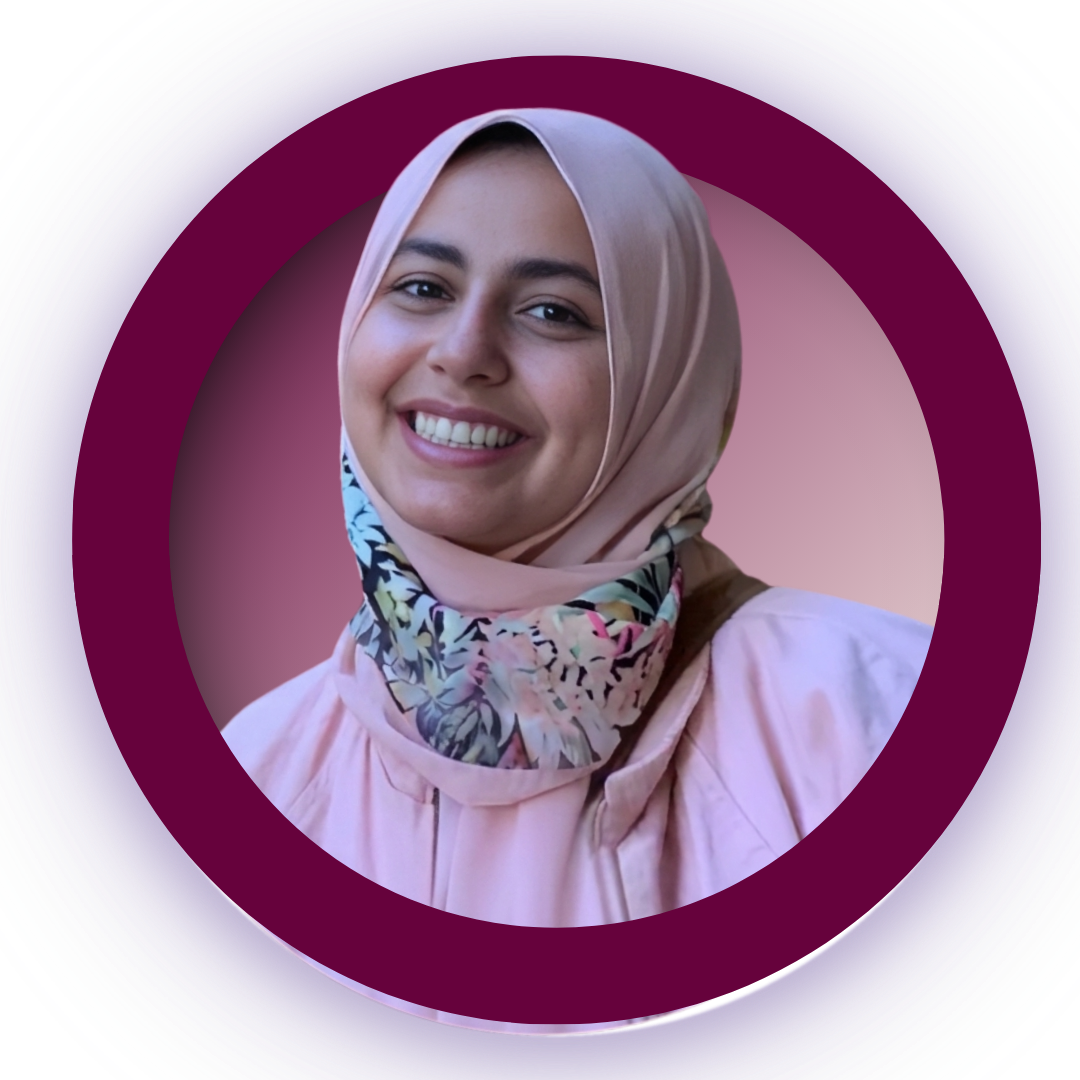
Sanna Darwish, M.S. CCC-SLP
Press Inquiries
We The Billions
hello [at] wethebillions.com
2026560054
https://www.wethebillions.com


Legal Disclaimer:
EIN Presswire provides this news content "as is" without warranty of any kind. We do not accept any responsibility or liability for the accuracy, content, images, videos, licenses, completeness, legality, or reliability of the information contained in this article. If you have any complaints or copyright issues related to this article, kindly contact the author above.
